feature · gaming
Fire Emblem: Fortune's Weave — Release Date, Story and Everything to Know
Fire Emblem: Fortune's Weave is out now exclusively on Nintendo Switch 2. Here's the confirmed premise, the four playable heroes, and how the game's systems actually work.
 By Bamo Anwar6 min read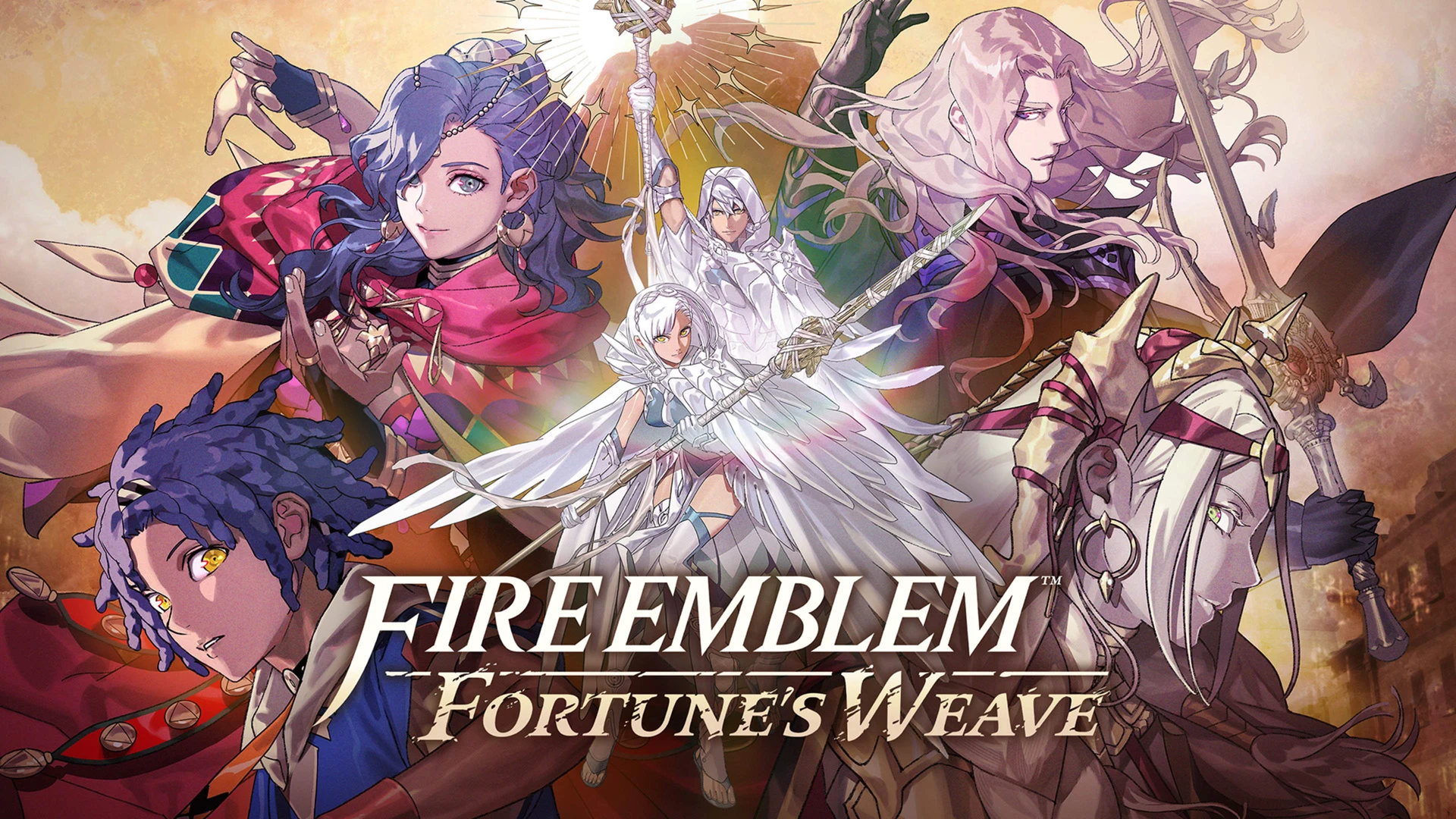
Fire Emblem: Fortune’s Weave is out now, having launched September 17, 2026 exclusively on Nintendo Switch 2. It’s developed by Intelligent Systems and published by Nintendo, and it’s a fresh, standalone story rather than a sequel or remake — there’s no prior game you need to have played to follow it.
The Quick Version
| Release date | September 17, 2026 |
| Platform | Nintendo Switch 2 (exclusive) |
| Developer | Intelligent Systems |
| Publisher | Nintendo |
| Standard Edition | $79.99 physical / $69.99 digital |
| Dagdan Collection (special edition) | $119.99 |
| File size | 29.5 GB |
| Modes | Single-player only; TV, tabletop and handheld |
What Fortune’s Weave Is About
Nintendo’s own description sets the stakes plainly: “Travel through time to gather allies and defeat the demon god Balor. Test your tactical prowess in battle as you guide four heroes on their interwoven journeys from past to present.”
The story centers on the Heroic Games, a competitive tournament held in Dagsion, capital city of the Dagdan Empire — “a prosperous land ruled by the gods.” Fighters travel from across the world for a shot at the tournament’s prize: a single wish, granted to whoever wins. That premise gives the game a reason for its cast to clash with and alongside each other before the larger time-spanning plot around Balor kicks in.
Nintendo’s September 14 overview trailer and accompanying character rundown clarify who’s actually driving that time-travel plot. The player controls a distinct Protagonist — described as “tasked with saving the world” and sent “back in time to guide the heroes” — separate from the four playable heroes below. Two named deities factor into that setup: Fortuna, “the Goddess of Fate who aids you on your journey through time,” and Sothis, “the Progenitor God who sets you and Fortuna on a quest to save the world.”
The Four Heroes
Fortune’s Weave splits its story across four playable leads, each entering the Heroic Games for a different reason:
- Cai — a young boy fighting to save his imprisoned father, wielding a bo staff powered by a magical gem
- Dietrich — a ruthless swordsman who enters the Games purely to test himself against stronger opponents
- Theodora — a queen competing to fulfill a long-held dream for her homeland, fighting with a spear
- Leda — a talented musician whose real goal in the tournament is revenge
Nintendo has also shown Anatolia, described as a mysterious, gun-wielding “bride” character, though she hasn’t been confirmed as a fifth playable lead the way the core four have.
Nintendo’s overview trailer clarifies how the four heroes’ stories actually connect: rather than requiring separate playthroughs of each hero’s route, Fortune’s Weave lets players “follow the different paths of the four heroes and their allies as their tales are woven across time” within the same playthrough. Nintendo hasn’t gone further than that framing — the exact mechanics of switching between heroes mid-game, or how much of each hero’s personal story is mandatory versus optional, remain unconfirmed.
How the Game Actually Plays
Combat follows the series’ usual shape: turn-based tactical battles on grid maps, with permadeath-style stakes built into how Fire Emblem has traditionally handled unit loss. On top of that base, Fortune’s Weave adds a few systems specific to this game:
- Blaze Arts — signature moves that cost HP to use, building up a Blaze Gauge in exchange. Nintendo’s overview trailer confirms the gauge grants a power boost once it’s half full, but filling it completely triggers Burst, which ends those bonuses and cuts the hero’s max HP in half — so it’s a genuine risk-reward mechanic with a real downside for pushing it too far, not just a stronger-attack button.
- Blessings — a system of divine boons that level up over the course of the game, layered on top of standard unit growth. Nintendo cites reducing incoming damage as one concrete effect a leveled-up Blessing can grant.
- Clashes — a named battle type fought inside dungeons, described as fights “where your team takes turns attacking the enemy” against monsters and other hostiles encountered while exploring.
- Heroic Games battles — the tournament fights themselves come with their own terrain layouts and special rules, distinct from the story’s regular battles.
Outside combat, Dagsion itself functions as a hub: Nintendo describes recruiting allies around town, leveling up Blessings at temples, honing skills at the training ground, and building bonds of friendship at inns. Beyond the city, the overview also confirms a separate world map to explore for quests, resources and experience against roaming enemies, on top of the dungeon crawling for materials and treasure already known. That’s the same basic loop — fight, then spend downtime strengthening your roster and relationships — that recent Fire Emblem entries have built around, adapted to this game’s tournament setting.
On the technical side, Switch 2’s Joy-Con 2 controllers support mouse-style controls for moving units and issuing commands on the battlefield, which Nintendo has singled out as a new option for this entry specifically.
Editions and Pricing
Fortune’s Weave ships in two versions. The Standard Edition runs $79.99 physical or $69.99 as a digital eShop purchase. There’s also a Dagdan Collection special edition at $119.99, though Nintendo’s listings so far cover pricing and the edition’s existence without a full breakdown of exactly what extra content or physical items it includes.
What’s Still Unknown
Nintendo hasn’t detailed a full story synopsis beyond the Heroic Games/Balor/Sothis framing, hasn’t confirmed Anatolia’s playable status, and hasn’t broken down what’s actually inside the Dagdan Collection. The overview trailer also stops short of explaining exactly how switching between the four heroes works moment to moment, or how mandatory each hero’s individual story is within a single playthrough. Those are questions for hands-on impressions now that the game is actually out, not something Nintendo’s marketing has answered.
The Bottom Line
What’s locked in is straightforward: a September 17 Switch 2 exclusive, now available, with four heroes with clearly defined personal stakes, a tournament framework in Dagsion, a separate time-traveling Protagonist guided by Fortuna and Sothis, and combat built on Fire Emblem’s usual tactical foundation plus the Blaze Arts, Blessings and Clashes systems. The parts still worth waiting on are the ones Nintendo hasn’t spelled out yet — exactly how the four heroes’ stories interlock in practice, and what a demon god has to do with a fighting tournament.
Sources
- Nintendo — Fire Emblem: Fortune's Weave official product page
- Nintendo of America — Fire Emblem: Fortune's Weave Nintendo Direct 6.9.2026 — June 9, 2026
- Nintendo of America — Fire Emblem: Fortune's Weave — Overview Trailer — Nintendo Switch 2 — September 14, 2026
- Gematsu — Fire Emblem: Fortune's Weave 'Overview' trailer — September 14, 2026
- Nintendo Life — Fire Emblem: Fortune's Weave
Make Red Reactions a preferred source
Choose Red Reactions as a preferred source in Google Search.
Confirm your choice on Google.
Related coverage
Xenoblade Chronicles 3 Switch 2 Edition Adds Shimmer, Heroes' Vault and 4K/60fps — Here's What's New
Xenoblade Chronicles 3 – Nintendo Switch 2 Edition launches December 3, 2026, with 4K/60fps visuals, a new Hero named Shimmer, the Heroes' Vault battle mode and a $9.99 Upgrade Pack for existing owners. Here's exactly what's confirmed.
Resident Evil 2, 3 or 4 on Switch 2 — Which One Should You Play First?
Resident Evil 2, 3 and 4 all launch on Switch 2 the same day. Here's how the three remakes actually compare on story, horror-vs-action balance, length and beginner-friendliness — and which one to buy first.
Minecraft Dungeons II — Release Date, Platforms, Co-op and Everything Confirmed So Far
Minecraft Dungeons II is available now. Here's the confirmed platform list, cross-play and mixed co-op options, Game Pass access, editions and Hero Cape deadline.
Fate/EXTRA Record Explained — What the Remake Changes From the Original PSP Game
Fate/EXTRA Record launches January 28, 2027 on PS5, PS4, Switch 2, Switch and Steam. Here's exactly what the remake changes from 2010's Fate/EXTRA, how the new Command Card battle system works, and whether a newcomer can actually start here.
About the author
Bamo Anwar
Anime & Gaming Writer
Bamo Anwar covers anime and gaming for Red Reactions. His work ranges from release news and detailed trailer breakdowns to beginner guides, watch orders and explainers designed to make large franchises and game systems easier to enter.
Coverage: Anime · Gaming · Beginner Guides · Watch Orders · Explainers
More from Bamo Anwar