news · tv
James Gunn Called Lanterns Episode 3 'One of the Best' — John Stewart's New Origin Is Dividing Viewers
OutKast reveals how John's parents and the Guardians prepared him for the ring. What the interview, childhood tests and military fallout mean for his new origin.
 By Aram Anwar6 min read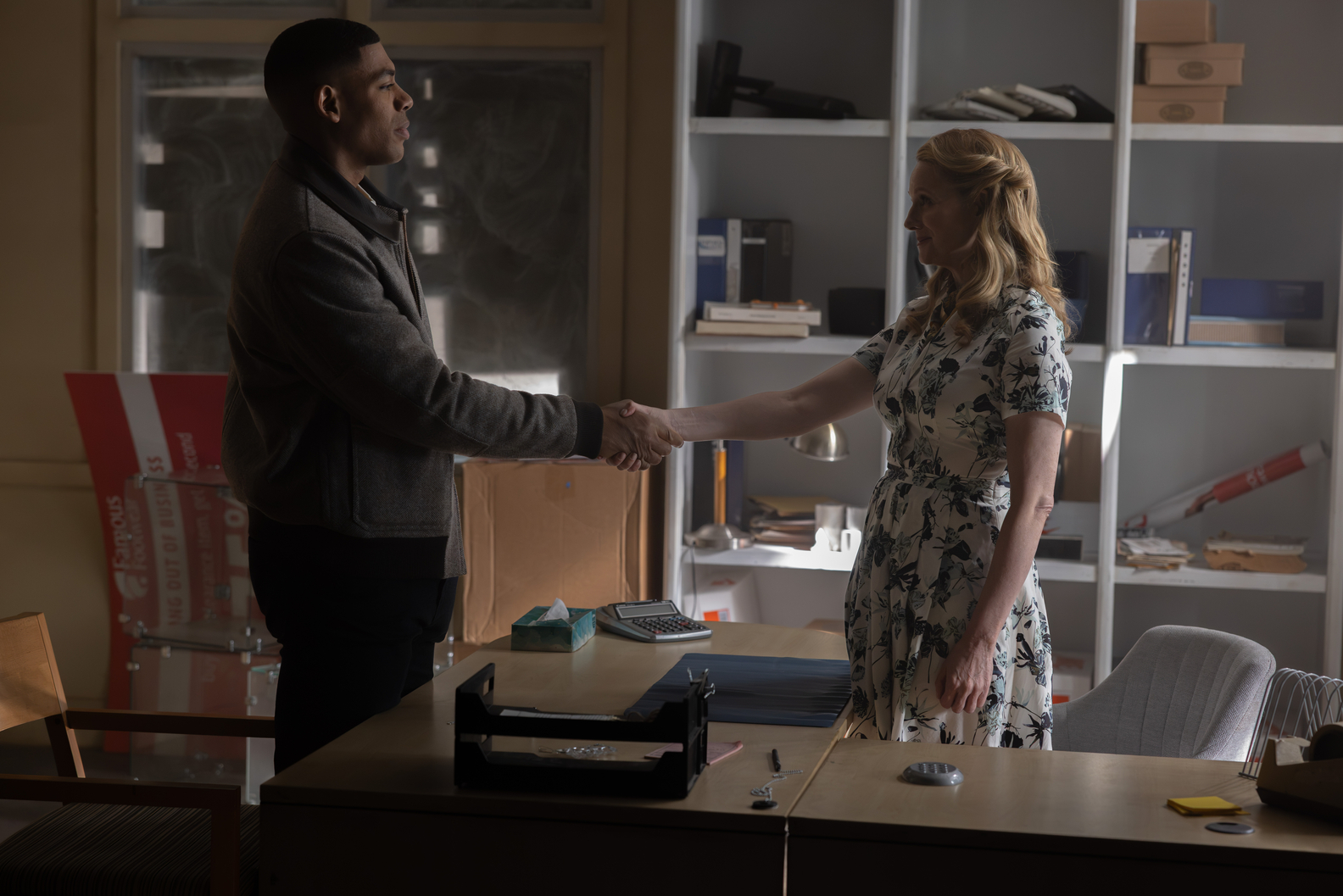
Spoilers for Lanterns through Episode 3, “OutKast,” only. James Gunn urged viewers to watch the episode before it aired, calling it “one of the best.” Its big reveal is that John Stewart was not simply recruited as Hal Jordan’s backup. A Guardian had watched his family since he was a baby, and John’s parents deliberately shaped his childhood around the possibility that he would one day wear the ring. The episode ends by making clear that the Guardians intend him to replace Hal, while telling Hal he is only training a backup.
That revision has prompted debate about the treatment of John’s family and the racial pressure behind their choices. Its chronology is central: a Guardian interview in 2016 frames the earlier events, explaining why John understands Hal differently from the way Hal understands John.
Why does Lianna interview John?
The episode takes a break from the Rushville Manhunter investigation introduced in Episode 2. Before John begins training with Hal, he meets Lianna, a Guardian of the Universe in human form. John questions why an interview is needed when a Green Lantern ring has historically chosen its wearer. Lianna asks about his military service, his relationship with his parents and his view of Hal and Sinestro.
The interview is more than a standard fitness test. It assesses someone the Guardians have already singled out. John knows his family’s history with the ring; Lianna knows parts of it that even he has not connected. Their conversation supplies the frame for the flashbacks rather than an answer to the present-day Manhunter case.
Why was John’s father passed over?
Years earlier, a green force lifted John Stewart Sr. from his home and asked if he was afraid. He admitted fear and was returned. When Hal later appeared publicly as the Green Lantern, John Sr. recognized the same selection test and understood what he had lost. The experience damaged his family life. It also brought Lianna to Bernadette, John’s mother.
Lianna’s offer of compensation did not erase the social cost of John’s father’s experience. Bernadette recognized that an extraordinary claim from a Black man had been treated differently from Hal’s televised success. The Guardian’s inability to understand the racial stakes is part of the episode’s point. Lianna saw potential in the family’s youngest son; Bernadette and John Sr. turned that possibility into a plan.
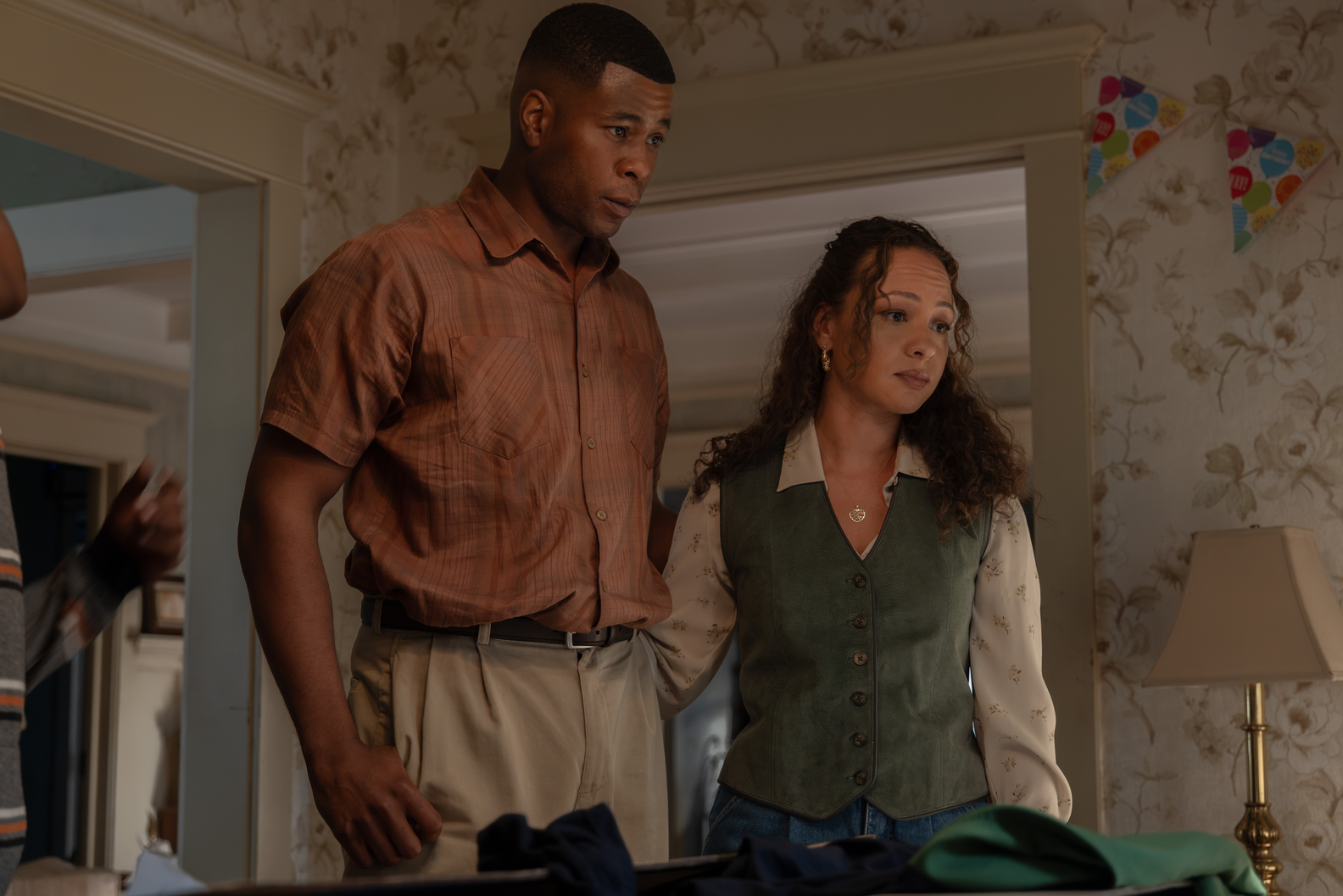
John Stewart Sr. and Bernadette make John’s possible selection a family project. Photograph by John Johnson/HBO Max, via Warner Bros. Discovery Pressroom.
Raised to be fearless, at a cost
The parents’ methods become the episode’s most disturbing material. They favor John over his brothers, steer him away from his artistic interests, leave him to navigate a dangerous walk home, and use firearms in tests of fear. The order of the apple scenes matters: John Sr. first shoots an apple off young John’s head. Later, when John cannot bring himself to shoot an apple off his father’s head, he ultimately shoots one off Bernadette’s. John learns to suppress panic, but the show also displays the damage done by treating childhood as Green Lantern preparation.
John resists Lianna’s suggestion that people can simply be programmed. He says he was raised. The distinction is not a clean defense of his parents. It preserves his agency and his love for them while leaving viewers to see how much of that upbringing he chose. Actor Aaron Pierre told TVLine that John has unresolved, internalized trauma beneath his controlled exterior. That is Pierre’s reading of the character, and it fits the contrast between the composed adult and the child under pressure.
The flashbacks also complicate the idea that John has no interests outside the ring. He draws, and after his military career ends, his mother helps him move toward art school. His creativity is a part of him that his parents’ training did not erase.
What happened in John’s military career?
John becomes a Marine sniper and waits months for a target. Hal intervenes before John can complete the mission. The resulting political fallout costs John his military career. He does not give Lianna every detail willingly, but the sequence explains why his respect for Hal’s public role can coexist with anger toward Hal personally. To Hal, John is a newcomer who wants his job. To John, Hal has already altered his life twice: first as the man chosen after his father, then as the Lantern whose intervention ended his service.
The episode’s final conversation with Lianna sharpens the betrayal. She says the Guardians want John to replace Hal; Hal is to be told he is training a backup. Hal later visits John’s family and makes clear he will not willingly give up the ring. The collision is built into the arrangement before the Rushville case begins.
How does this differ from DC Comics?
The HBO series gives John a family plan tied to the Guardians and a prior personal grievance against Hal. That is a show-specific origin, not a claim about every comics version of John Stewart. In DC comics, John is strongly associated with architecture, Marine service and his selection as Hal’s backup, but his childhood is not generally organized around a Guardian bargain with his parents. Our John Stewart comics and screen explainer separates those continuities.
Writer Vanessa Baden Kelly told TheWrap that the team wanted to deepen John’s backstory and examine the extra demands placed on a Black hero seeking a role someone else already holds. That explains the writers’ intention; it does not require readers to approve of the Stewarts’ methods. The episode leaves room for discomfort about whether John was prepared for a calling or denied an ordinary childhood.
Why the response is divided
Published critics have mostly praised the hour: Rotten Tomatoes lists an 89% critic score from nine reviews, and The A.V. Club graded it B+. That critic sample is small and is not a measure of audience opinion. Discussion among viewers has focused on the Stewarts’ methods and the episode’s treatment of race. CinemaBlend reported writer Baden Kelly’s response to people calling the story “woke”; she pointed to John’s long comics history of confronting racism and war. Readers can reject the parents’ tactics while recognizing the pressure the episode says they felt. Those are different judgments, which is why the origin has generated more argument than a simple continuity change.
At the Episode 3 boundary, John knows more about his selection than Hal does, while Hal knows John wants the ring. Neither has resolved the trust problem left by Rushville. Episode 4, “The Weenie,” brings them back to the Manhunter investigation.
Sources
- James Gunn — Episode 3 post on X — August 30, 2026
- TheWrap — Lanterns Episode 3 writer explains John Stewart's new origin — August 30, 2026
- But Why Tho? — OutKast recap — August 31, 2026
- The A.V. Club — OutKast recap — August 30, 2026
- TVLine — Aaron Pierre on John Stewart's childhood trauma — August 30, 2026
- CinemaBlend — Vanessa Baden Kelly addresses criticism of OutKast — September 1, 2026
- Rotten Tomatoes — Lanterns Season 1 Episode 3 critic reviews
- Warner Bros. Discovery Pressroom — Lanterns Episode 3 images
Make Red Reactions a preferred source
Choose Red Reactions as a preferred source in Google Search.
Confirm your choice on Google.
About the author
Aram Anwar
Founder & Editor
Aram Anwar founded Red Reactions and writes across comics, gaming, movies and television. His work includes franchise guides and large Lore / Explained features, with an emphasis on separating confirmed details from reports, theory and speculation.
Coverage: Comics · DC & Marvel · Gaming · Movies & TV · Lore / Explained · Guides
More from Aram Anwar