lore · comics
Absolute Batman Explained: Why This Bruce Wayne Is Completely Different
No manor, no money, no butler — and a chest emblem that doubles as an axe. DC's Absolute Batman reimagines Bruce Wayne as a working-class civil engineer.
 By Aram Anwar6 min read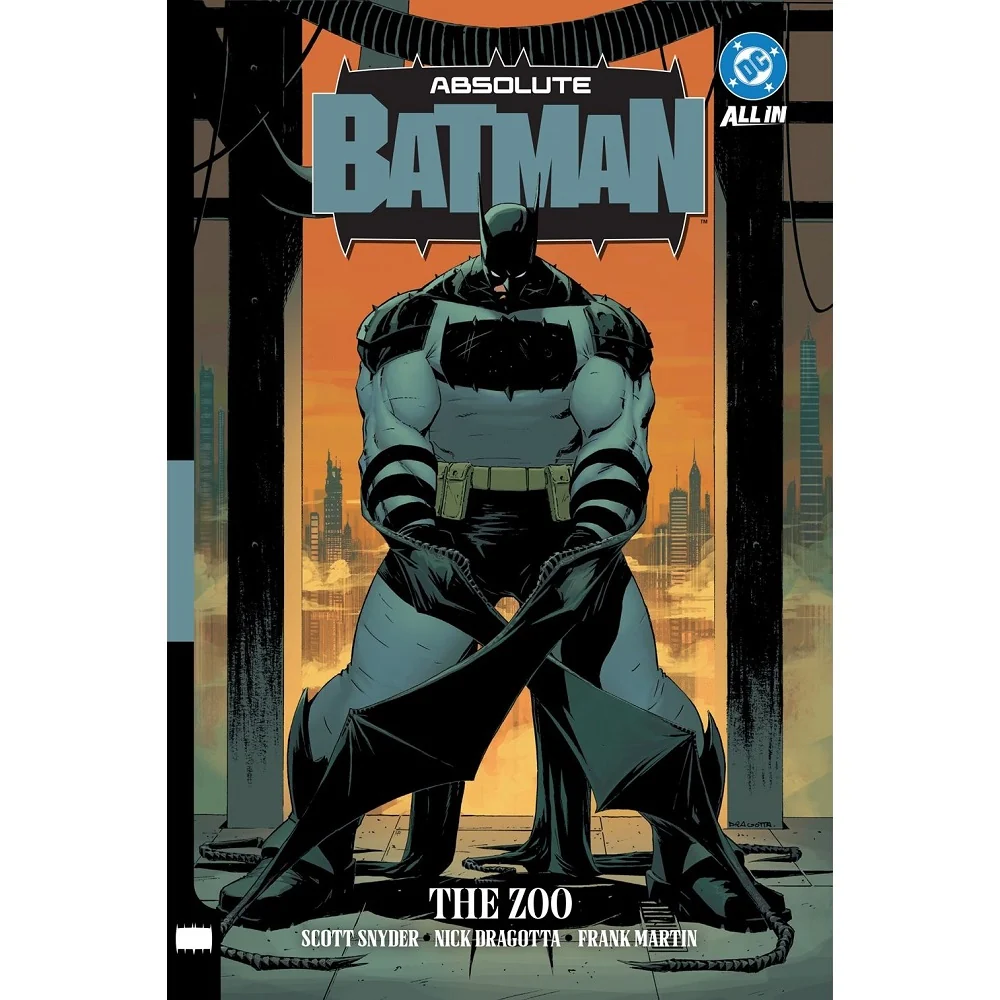
DC’s official logline for the thing is six words: No manor, no money… all Batman.
That’s Absolute Batman, one of the foundational books in DC’s Absolute Universe, launched in October 2024. The useful question is what changes when Bruce Wayne loses the advantages we usually associate with him.
All of that for a Batman with no inheritance, no cave, and a working-class civil-engineering job in Gotham.
Spoilers: This explainer discusses Bruce’s origin in The Zoo and the Joker reveal in issue #15.
Correction — October 1, 2026: Removed sales, printing and market-share claims without a sufficiently defined measurement basis. Updated the issue availability reference, clarified the adaptation’s reported development status and corrected the claim that this Batman never carries a gun.
What the Absolute Universe actually is
The Absolute line launched alongside DC’s “All In” initiative in October 2024, overseen by Snyder. It runs parallel to mainstream continuity rather than replacing it — a separate reality within the multiverse, sharing space with Absolute Wonder Woman and Absolute Superman.
The conceit is elegantly simple. Where the main DC Universe is shaped by what Snyder has described as Superman energy — a world where systems tend to favour hope and heroes have institutional advantages — the Absolute world runs on Darkseid energy. Every hero is stripped of the thing that made them comfortable and made an underdog against entrenched power.
For Superman, that means no traditional Kent-and-Smallville upbringing. For Batman, it means no money.
Bruce Wayne without the billions
Absolute Bruce grows up without inherited wealth. Crucially, Martha is alive, a change DC’s discussion of issue #1 places at the heart of the new origin. He and his mother live with the loss together; she remains part of his adult life.
Snyder describes a Batman formed by a mass shooting, whose response is to change the world that produced his trauma. That is a different emotional foundation from the familiar image of an orphan alone in a mansion.
Bruce is a civil engineer, rather than a billionaire funding a private arsenal — a distinction also described in GamesRadar’s account of this continuity.
That job is the whole design. Engineering becomes a way to read the city rather than an advantage bought from outside it. To me, his day job and his war on corruption feel like two uses of the same knowledge.
Why he’s built like that
Dragotta’s Batman is enormous, deliberately pushed toward almost Hulk-like proportions. The lack of wealth and resources means Bruce makes his own body part of the equipment. His silhouette is blocky, industrial and tank-like, and it’s a psychological weapon in a way sleek theatricality isn’t.
The suit
It’s the best-designed superhero costume in years, and every element of it is a tool.
The chest emblem doubles as an axe head. The broad, blocky symbol is therefore equipment as well as a silhouette: a piece of the costume becomes a close-range weapon.
The cape has rigid portions that act as stilts and weapons. It changes the way his huge body can occupy a fight, rather than serving only as theatrical cloth.
The cowl ears double as blades. DC’s issue #1 commentary explains all three design choices; their strange proportions have a practical purpose.
Despite the brutality, he avoids killing. That is different from saying he never uses a gun: DC explicitly describes him shooting Alfred with non-lethal bullets in issue #1. The boundary is his moral code, not an absence of weapons.
Alfred is an operative
Not a butler. Not a father figure. Not remotely a servant.
Absolute Alfred is an intelligence operative, rather than Bruce’s employee, and the series’ point-of-view character. Snyder’s DC interview describes him as the older man who comes to follow and help this idealistic Batman. The partnership has to form; it is not inherited with a household.
It’s the sharpest inversion in the book. The traditional dynamic is a wealthy man and his devoted retainer. Here it’s two dangerous professionals negotiating a working relationship neither of them planned.
His friends became the rogues
Bruce grew up alongside familiar names: Waylon Jones, Eddie Nigma, Ozzie Cobblepot, Harvey Dent and Selina Kyle. DC’s discussion of the first collection identifies the childhood-friend reversal for Harvey, Edward, Waylon and Oswald; the rogues guide follows Selina and the later Ark M transformations.
You can see the engine from here. Bruce doesn’t fight anonymous criminals — he watches systemic pressure grind his childhood friends into the villains you already know. DC’s guide to the rogues traces Ark M’s role in those transformations and Selina’s emergence as Catwoman.
The Joker has the money and the system
This is the change that makes the whole thesis work.
Absolute Joker is Jack Grimm. DC’s account of the issue #15 reveal identifies a centuries-old figure who moved from street performance into technology and built the international Ark prison project. He is the man who never laughs.
In his May 2026 DC interview, Snyder describes Joker as a billionaire, a publicly beloved philanthropist and a representative of order. The exact size of the fortune is less useful than its function: Bruce is the outsider disrupting a system Joker commands.
Mainstream Joker is chaos attacking an aristocrat. Absolute Joker is capital attacking a labourer. That’s not a costume change — it’s a different story.
Where to start
Straight in at Absolute Batman #1, or the first collection, Vol. 1: The Zoo, which gathers Absolute Batman #1–6. No previous DC reading is needed to begin this separate continuity. For where it fits alongside the rest of the line, see our DC Absolute Universe reading order.
If you prefer collected books, The Zoo is the opening arc rather than a sampler of later stories. Continue with Vol. 2: Abomination, then Vol. 3: Devil’s Workshop. Our collected-edition comparison lists the issues and explains the Annual and Ark M material included in the third book, so readers who own single issues can check for overlap.
As checked on October 1, 2026, DC lists issue #24 as available, with an on-sale date of September 23. That is an availability reference, not a claim that the opening collection contains later issues.
Is there an animated adaptation?
An adult animated series is in development. Reporting from the June 25, 2026 Annecy announcement identifies Scott Snyder as showrunner and executive producer and Nick Dragotta as producer. TheWrap’s report from the event establishes the development announcement; TVLine’s coverage specifies the roles and says no network or streaming platform was attached at that announcement. Development is not a released show or a premiere date. The comics are the starting point available now.
The bottom line
The question Snyder set himself was what’s left of Batman when you remove the money, the manor, the R&D department and the butler.
The answer the series keeps arriving at is: all of it. The willpower, the engineering mind, the refusal to stop, the empathy for people the city has written off. Take away the billions and you don’t get a lesser Batman — you get a clearer one, punching upward for once.
Cover artwork: Absolute Batman Vol. 1: The Zoo. DC Comics; cover art by Nick Dragotta and Frank Martin.
Make Red Reactions a preferred source
Choose Red Reactions as a preferred source in Google Search.
Confirm your choice on Google.
Related coverage
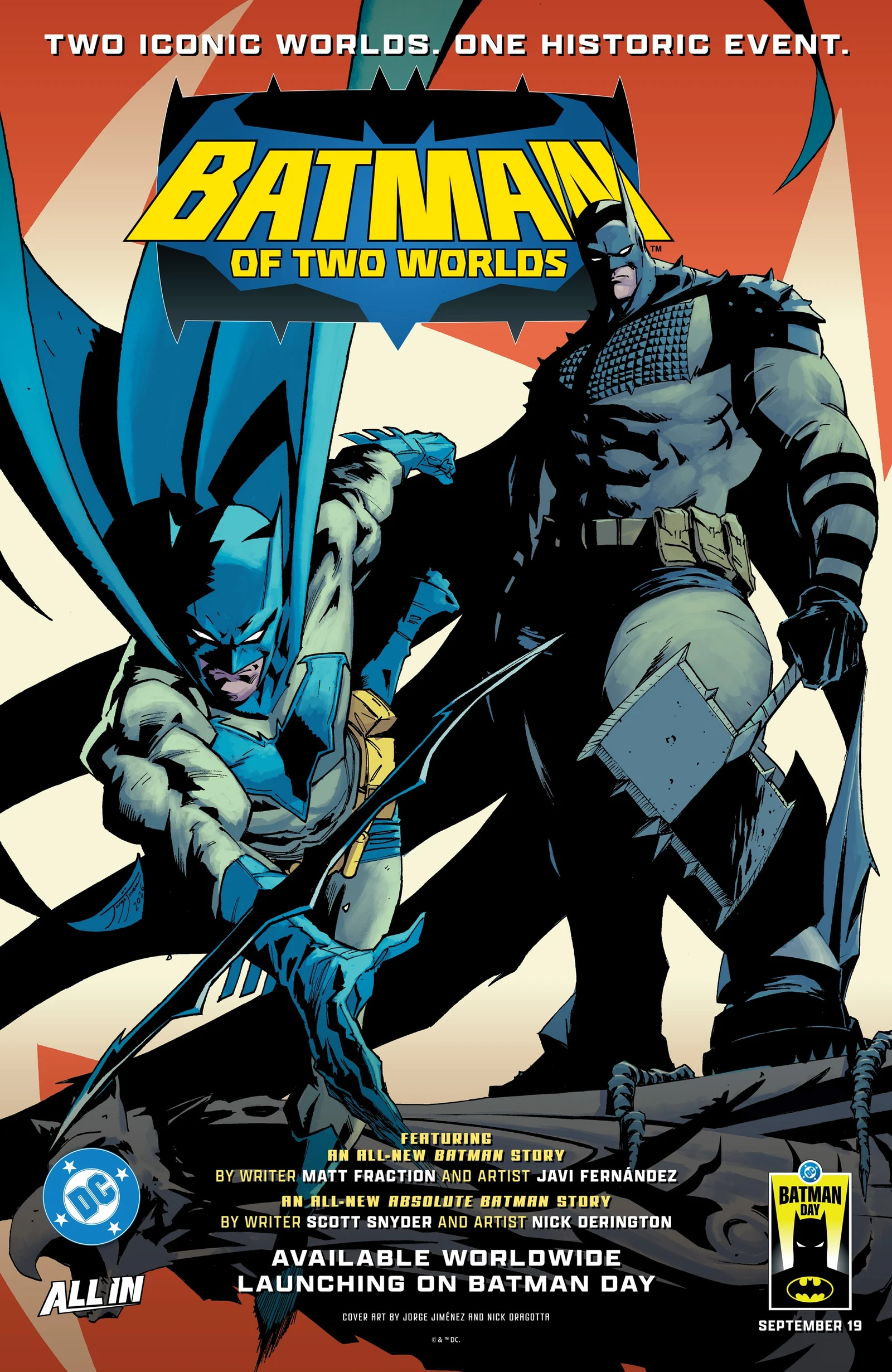
Batman of Two Worlds Explained — How Main DC Batman and Absolute Batman Solve the Same Crime
DC's Batman Day 2026 one-shot Batman of Two Worlds puts mainstream Batman and Absolute Batman in the same issue — but not the same story. Here's exactly how the comparison works, and whether the two Bruce Waynes actually meet.
What Is DC's Absolute Universe? Everything You Need to Know
A parallel DC reality where Batman has no money, Superman has no Kansas, and Wonder Woman was raised in Hell. Here's how it works and where to start.
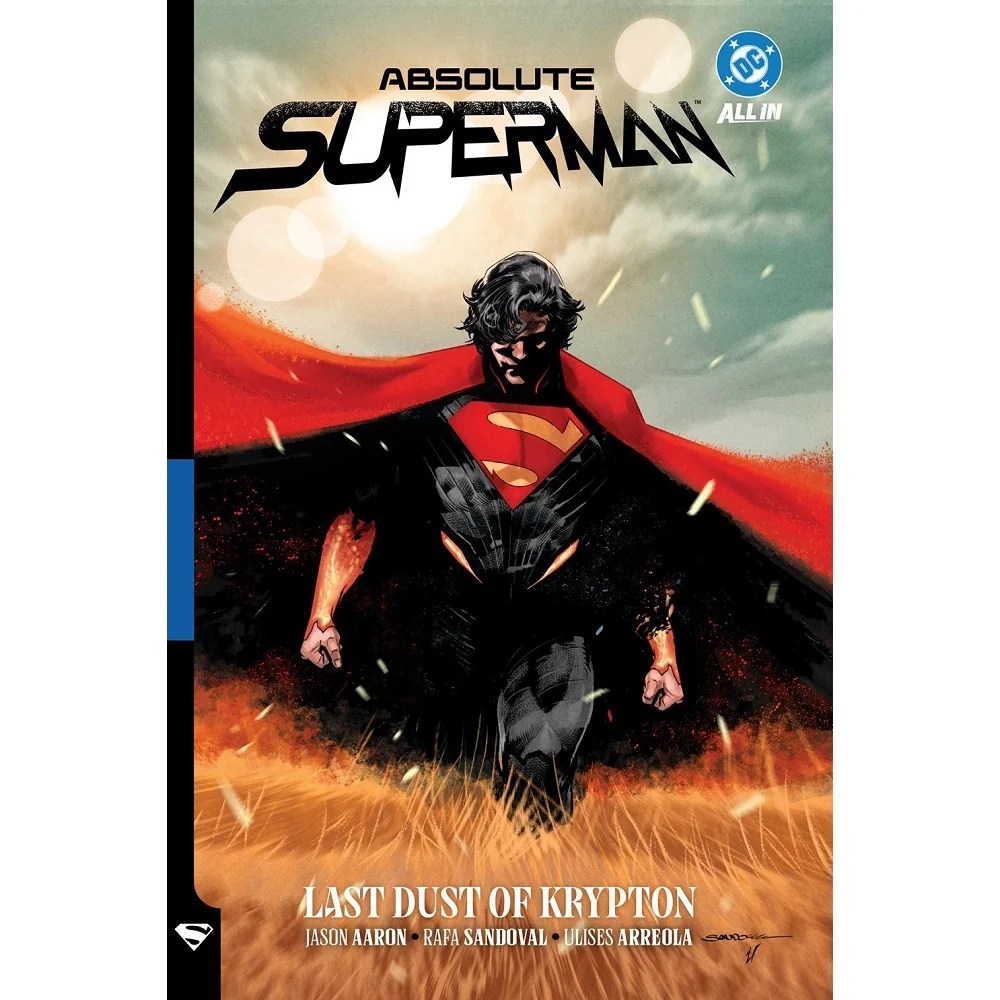
Absolute Superman Explained: Origin, Powers, and Every Major Change
No traditional Kent upbringing. No familiar Daily Planet setup. DC's Absolute Superman grew up on Krypton, arrived on Earth as an adolescent refugee, and rebuilt the Man of Steel from the ground up.
Absolute Wonder Woman Explained: DC's Darkest Reinvention of Diana
Raised in Hell by Circe and denied Themyscira and her sisterhood. The Eisner-winning reinvention of Wonder Woman, explained for new readers.
About the author
Aram Anwar
Founder & Editor
Aram Anwar founded Red Reactions and writes across comics, gaming, movies and television. His work includes franchise guides and large Lore / Explained features, with an emphasis on separating confirmed details from reports, theory and speculation.
Coverage: Comics · DC & Marvel · Gaming · Movies & TV · Lore / Explained · Guides
More from Aram Anwar