feature · gaming
Valve Is Expanding SteamOS to More Handhelds, and I Hope It Keeps Going
SteamOS now runs on hardware Valve didn't build — including devices Microsoft co-engineered. Here's what's actually supported, what isn't, and why the competition is good for everyone.
 By Aram Anwar6 min read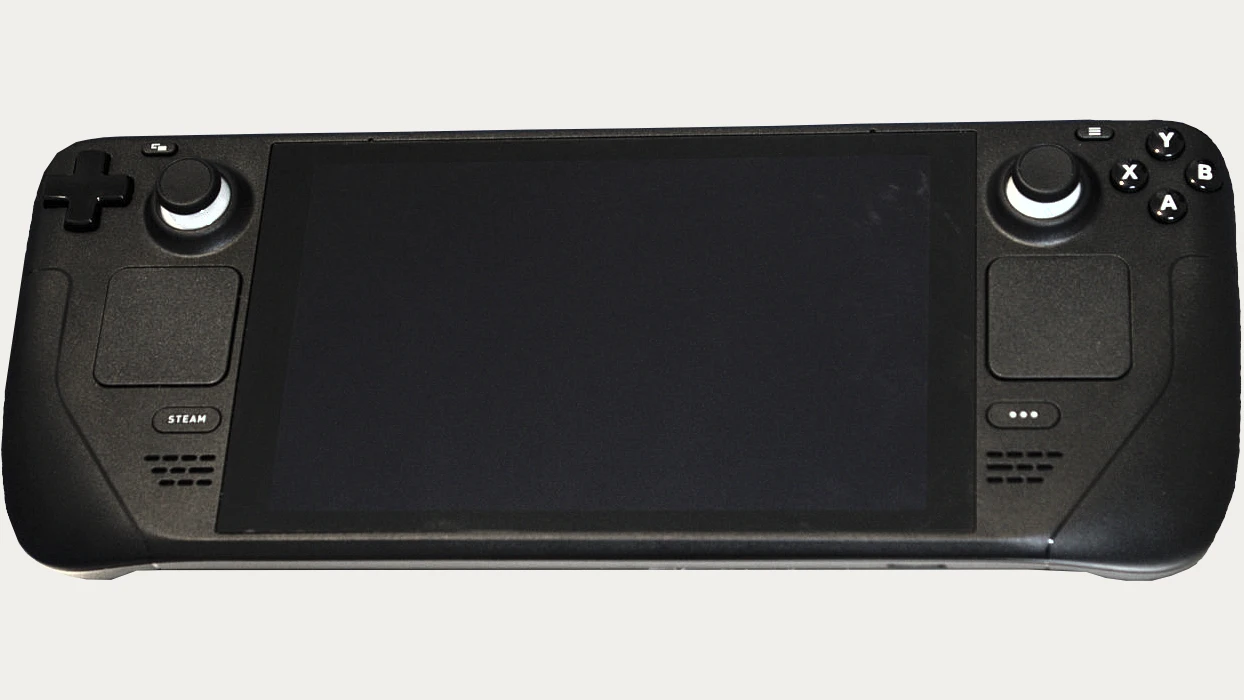
A decade ago Valve tried to put its operating system on other people’s hardware and failed so completely that “Steam Machine” became a punchline.
It’s worth sitting with how thoroughly that has reversed. Valve’s SteamOS release notes now include support and fixes for hardware it does not sell, from controller mappings to device-specific audio and power-management work.
What that support actually amounts to varies enormously by device, and it’s worth being precise about the difference. A handful of machines ship with SteamOS from the factory. A larger group can install Valve’s recovery image and get most things working. A larger group still simply appears in a changelog line because Valve fixed a gamepad mapping. All three get called “SteamOS support,” and they are not the same thing.
Even so, Valve is now actively patching hardware made by its competitors. That’s a strange and genuinely good thing, and I want more of it.
Update — October 1, 2026: The August beta advice below has been replaced with Valve’s September releases. Individual controller support does not establish full-device compatibility or approval to replace Windows.
Hero image: Liam Dawe / GamingOnLinux, PNG version by VulcanSphere, CC BY-SA 4.0. Background added and converted to WebP; the adapted image is licensed CC BY-SA 4.0.
What actually changed
As checked on October 1, Valve’s SteamOS 3.8.28 stable release, published September 24, includes improvements for MSI Claw and OneXPlayer variants and initial gamepad support for devices including Konkr FIT and AYANEO Pocket S2. The same changes appear in Valve’s official news archive.
The important word is gamepad. A mapping for a device’s controls does not mean its processor, display, wireless hardware and power management are all supported, or that it is sold with SteamOS.
Valve published SteamOS 3.9.2 Beta on September 25 for the Beta and Preview channels. Its preliminary Legion Go 2 brightness support is a useful example of work still happening at the component level. It is a test release, distinct from stable 3.8.28.
The detail I keep coming back to: Valve is already adding SteamOS hardware support for the ROG Xbox Ally series — controller support, TDP control, speaker audio, SD-card reliability work — even though ASUS and Microsoft sell those machines as Windows handhelds.
The honest caveats
Three, and they all matter.
Channel matters as much as version number. The August 3.8.25 beta and its reference to stable 3.8.16 are historical, not current installation advice. Valve explicitly labels 3.9.2 as features still being tested. For someone who wants to play rather than troubleshoot, my recommendation is the Stable channel and device-specific recovery instructions.
Factory installation and recovery-image compatibility are different questions. Valve’s Steam Deck ships with SteamOS; a changelog mentioning another handheld is not evidence that its manufacturer sells a SteamOS model. Before replacing an existing Windows installation, check the exact model against Valve’s SteamOS installation and repair guidance, back up its data and keep a route back to the original OS.
Support for one component is not a compatibility certificate. The Pocket S2 gamepad entry is a particularly good reason not to turn a list of names into a buying guide. Read the exact change before treating it as a supported SteamOS installation.
Why it works better on a small screen
Having used both, the case for SteamOS on a handheld isn’t really about frame rates. It’s about the fifty small frictions Windows puts between you and a game.
SteamOS boots into a controller-driven interface. You never see a desktop unless you go looking. It’s designed around quick suspend and resume, which gives handheld play a much more console-like feel. Windows handhelds still fight Modern Standby, still surface reboot prompts, still hand you a desktop UI designed for a mouse on a seven-inch panel.
Valve also does the unglamorous work: shader pre-caching that can reduce compilation-related stutter, TDP and refresh-rate controls in the quick menu rather than a vendor app, and system updates handled much more like an appliance than a traditional Windows desktop.
Why Windows still wins for a lot of people
I’d be lying if I said this was settled.
Anti-cheat is the wall. Several major competitive multiplayer games still block or simply don’t support SteamOS and Linux, because of their anti-cheat implementations or publisher policy.
The mechanism matters more than a permanent list. Valve’s Proton documentation says Easy Anti-Cheat and BattlEye require developers to enable or configure support for each title, and kernel-space anti-cheat is not supported. Bungie’s policy specifically excludes Destiny 2 on Steam Deck through SteamOS and warns against bypassing that incompatibility. Check the publisher’s current policy for the particular multiplayer game you need before choosing an OS.
Game Pass is the other big one. Microsoft’s Xbox app for PC is a Windows application. Microsoft separately documents Xbox Cloud Gaming through Edge on Steam Deck. That is streaming with a compatible subscription and connection, not a native PC Game Pass installation on SteamOS.
Everything outside Steam is friction. Epic, GOG, EA App, Battle.net — all possible via Desktop Mode or Heroic, none of it as simple as double-clicking an installer.
Competition is the actual story
Here’s the part I find genuinely encouraging, and it’s the reason I want SteamOS to keep spreading even if you never install it.
Windows 11 on handhelds was bad for years, and Microsoft had little obvious reason to fix it. Its newer controller-first approach is real: Xbox’s August 2025 announcement describes the full-screen experience’s reduced background activity, while the October 16 launch announcement confirms the ASUS partnership’s handhelds went on sale. That gives SteamOS a more serious Windows competitor.
Microsoft hasn’t said SteamOS forced its hand, so we shouldn’t pretend we can prove the cause. But competition now exists where there previously wasn’t much of it, and Microsoft’s controller-first Xbox experience makes Windows far more serious about handheld gaming than it used to be.
And it cuts the other way too: Valve’s own release notes now include hardware support for the ROG Xbox Ally — the device built specifically to showcase Microsoft’s handheld answer. Both platforms are being pushed to take handhelds seriously, and handheld owners are the ones collecting the winnings.
What I want to happen next
Editorial opinion, clearly labelled.
I want more handhelds sold with an OS choice at checkout, the way Lenovo does it — the same hardware, two SKUs, no Windows licence fee on the Linux one. I want Valve to keep the recovery images public and keep taking regression reports on hardware it doesn’t sell. And I’d like at least one major publisher to flip the EAC switch and find out that the sky doesn’t fall.
To be clear about what I’m not arguing: I don’t want Windows to disappear from handhelds. For a lot of people it’s still the right answer, and a market where Valve had no competition would get worse, not better. None of this requires SteamOS to win. It just requires it to stay credible enough that Microsoft can’t stop trying.
The bottom line
Game compatibility and native PC Game Pass remain reasons to keep Windows. Installing SteamOS on an existing machine also needs more care than choosing an update channel; the recovery procedure can erase its contents. Those are real limitations and I’m not going to pretend otherwise.
But a gaming-focused Linux OS that Valve is actively adapting to an expanding range of third-party handheld hardware is something this market badly needed. I think the competition makes both platforms more useful; the chronology alone cannot prove SteamOS caused Microsoft’s changes. Whatever you end up buying, that’s worth cheering for.
Make Red Reactions a preferred source
Choose Red Reactions as a preferred source in Google Search.
Confirm your choice on Google.
Related coverage
GTA 6: Release Date, Characters, Gameplay, Map and Everything We Know
GTA 6 launches November 19, 2026 on PS5 and Xbox Series X|S. Rockstar's new Leonida details include localized storms, hurricanes and more than 170 animal species.
Who Is Jason Duval? GTA 6's Co-Lead Explained
An Army stint, a rent-free stilt house, and a boss who owns his time. What Rockstar's People and Places profile establishes about Jason Duval, and what it leaves open.
GTA 6 Locations: Rockstar’s People and Places Explained
The six destinations in Rockstar’s People and Places: how Leonida’s cities, islands and wilderness differ, and what these profiles do not establish about the map.
Who Is Lucia Caminos? GTA 6's Co-Lead Explained
Prison, freedom, and a plan. What Rockstar's People and Places profile establishes about Lucia Caminos, including her imprisonment and release.
About the author
Aram Anwar
Founder & Editor
Aram Anwar founded Red Reactions and writes across comics, gaming, movies and television. His work includes franchise guides and large Lore / Explained features, with an emphasis on separating confirmed details from reports, theory and speculation.
Coverage: Comics · DC & Marvel · Gaming · Movies & TV · Lore / Explained · Guides
More from Aram Anwar

.png)