feature · tv
Who Is White Vision? Vision's Complete MCU Story Before VisionQuest
He isn't a clone, a copy, or a replacement. He's the original Vision's body, rebuilt by people who wanted a weapon. Here's the full story before VisionQuest.
 By Aram Anwar11 min read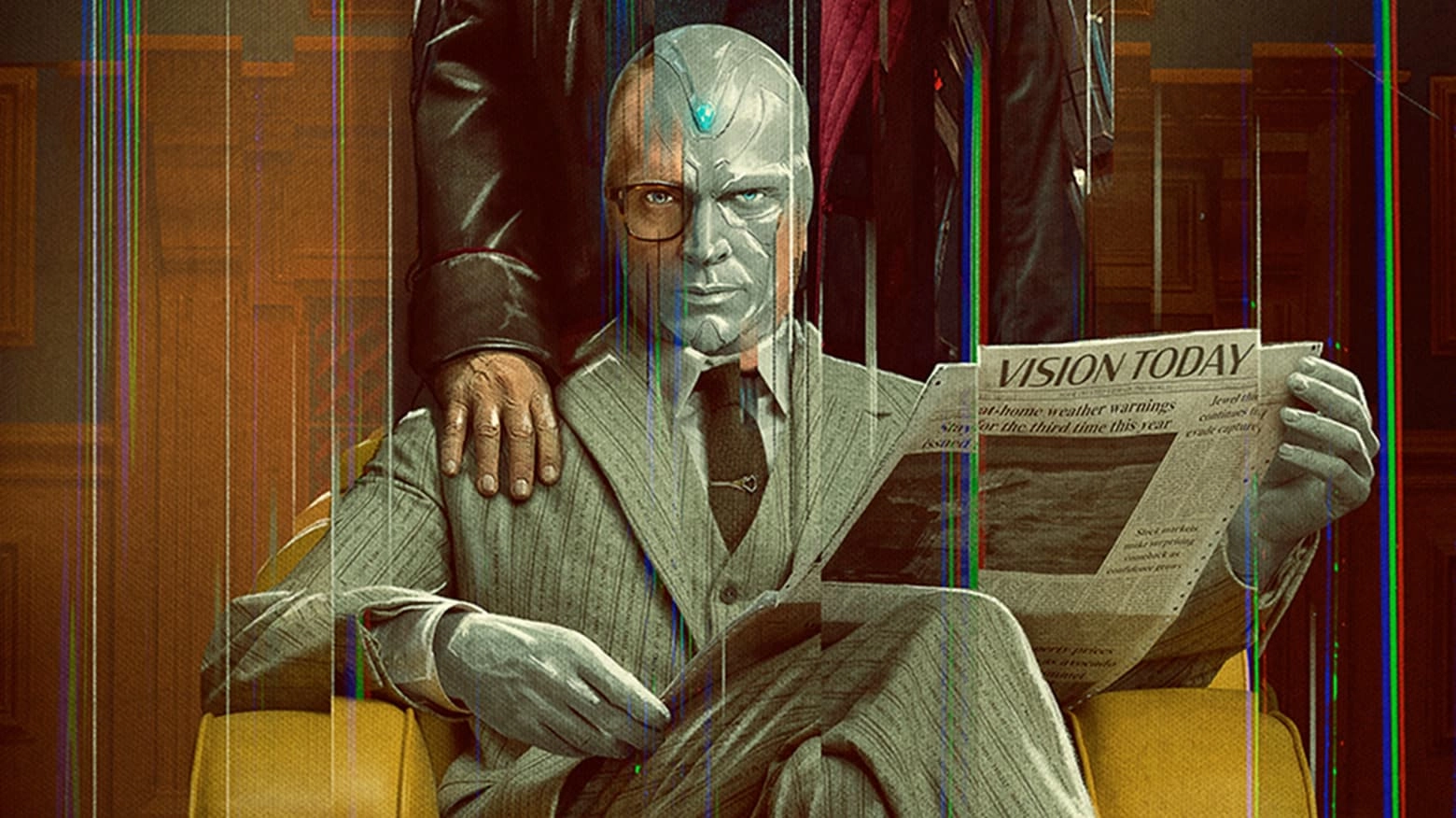
The most common thing people get wrong about White Vision is the most fundamental one: they think he’s a copy.
He isn’t. There is no duplicate, no clone, no spare chassis. White Vision is the actual body Thanos killed in Wakanda — the same vibranium, the same frame — recovered by a government agency, taken apart, put back together, and switched on for purposes its owner never agreed to.
That distinction is the entire premise of VisionQuest, which arrives on Disney+ on October 13, 2026 at 6 p.m. Pacific / October 14 at 01:00 UTC and picks him up years after he flew out of Westview. Here’s how he got there.
For release details, cast and story, see our complete VisionQuest guide. For Spader’s return, see our breakdown of Ultron’s return.
Heads up: full spoilers for WandaVision, Avengers: Infinity War and Agatha All Along below.
Watch the VisionQuest Trailer
Before Vision, there was J.A.R.V.I.S.
Paul Bettany joined the MCU in 2008 as a voice. J.A.R.V.I.S. — Just A Rather Very Intelligent System — was Tony Stark’s home and armour interface, named after Edwin Jarvis, the Stark family butler. He ran the workshop, the suits, and eventually the Iron Legion across Iron Man, Iron Man 2, The Avengers and Iron Man 3.
In Avengers: Age of Ultron, the newly awakened Ultron tore him apart. J.A.R.V.I.S. survived by scattering his core code across the internet and quietly working against Ultron from inside it — including protecting nuclear launch codes.
That scattered code is the foundation everything else is built on.
How Vision was actually made
This gets summarised badly in a lot of coverage, so here is the sequence:
- Ultron wants a better body. He uses the Mind Stone to control Dr. Helen Cho and forces her to grow a synthetic vibranium form in her Regeneration Cradle in Seoul.
- He sets the Mind Stone into its forehead, planning to upload himself.
- The Avengers steal the Cradle before he can make the transfer.
- Stark and Bruce Banner find J.A.R.V.I.S.’s surviving fragments and upload those instead.
- Thor supplies the lightning that finishes the job.
The being that wakes up says plainly that he is neither J.A.R.V.I.S. nor Ultron. So: Ultron commissioned and engineered the body and never got to live in it. Vision is something Ultron started and someone else completed — a distinction that becomes very important once you get to VisionQuest, where Ultron is back and making a claim on him.
Banner puts a finer point on it in Infinity War, describing Vision’s mind as a layering of J.A.R.V.I.S., Ultron, Tony, himself, the Mind Stone, and everything Vision has learned since. Not one author. Several.
The Mind Stone, and what it actually did
The Mind Stone sat in Vision’s forehead and was a central component of him — most directly, it was the source of the energy he projected from it. But his broader capabilities aren’t reducible to the Stone alone. He’s a synthezoid: a synthetic vibranium body woven in the Cradle, running on a set of interlocking systems, of which the Stone was one piece. It was never the whole of him.
Banner’s assessment in Infinity War is that Shuri could separate the Stone from Vision’s neural architecture and leave a functioning Vision behind.
That matters enormously, because it’s the difference between “removing the Stone kills him” and “removing the Stone changes him.” The show that’s coming is built in that gap.
Wanda
Vision and Wanda’s relationship starts with the Mind Stone — it’s what gave him life and what unlocked her powers. It develops through Civil War, where he tries and mostly fails to comfort her under house arrest at the Avengers Compound, and where he accidentally shoots down War Machine. By Infinity War they’re living together quietly in Edinburgh.
Then Thanos comes for the Stone, and Vision asks Wanda to destroy it — and him. She does. Thanos rewinds time with the Time Stone, brings Vision back, and tears the Stone out of his skull by hand.
Vision dies twice in about ninety seconds. Because he died before the Snap, he wasn’t dusted, and the reversal in Endgame didn’t bring him back.
The body goes grey. And it stays on the field.
What S.W.O.R.D. did with the body
This is the part that gets skipped, and it’s the ugliest thing in the story.
S.W.O.R.D. took Vision’s corpse. Under acting director Tyler Hayward, they pulled it apart across laboratory tables to study the vibranium and, ultimately, to reactivate him as a controllable weapon. The programme had a name: Project Cataract.
Wanda came to claim the body for a funeral. Hayward refused, walked her past technicians dismantling it, cited the roughly $3 billion of vibranium involved, and told her Vision wasn’t hers to take. She broke the observation glass, floated down, put her hand where the Mind Stone used to be — and felt nothing. No presence. She left without him.
Hayward later doctored that footage to make it look like a break-in, framing Wanda as having stolen the body in violation of Vision’s living will. He needed that lie to keep working unsupervised.
Vision, for the record, had explicitly not wanted his body weaponised. Hayward did it anyway.
Why he’s white
The MCU has never given a precise technical explanation for the white colouration, despite what a lot of write-ups claim. What WandaVision establishes is that S.W.O.R.D. repeatedly dismantled and reconstructed Vision’s original body while trying to reactivate it — Hayward’s own line is that they took the thing apart and put it back together a million times, trying every power supply they could find — and that the rebuilt version emerges in the colourless White Vision form.
What finally worked was magic. When Wanda disabled a S.W.O.R.D. drone inside the Hex and threw it back, it came out carrying traces of her Chaos Magic. Hayward’s team siphoned that energy into the rebuilt body — as he put it, they’d needed a little energy directly from the source — and White Vision opened his eyes, forehead and irises glowing blue.
The irony is total. Wanda’s grief-magic is what powered the weapon built to kill her.
White Vision vs. Hex Vision
The WandaVision finale puts two Visions on screen, and they are not the same kind of thing:
| White Vision | Hex Vision | |
|---|---|---|
| Body | The original vibranium body, rebuilt | Conjured by Wanda’s magic |
| Where he can exist | The real world, permanently | Sustained by the Hex; begins to disintegrate outside it |
| Memories | Present but locked by S.W.O.R.D. | None from before Westview |
| Forehead | Empty socket, powered by Chaos Magic | A magically manifested Stone |
One had the body and no self. The other had the self and no body.
The Ship of Theseus scene
They fight, briefly, and then they stop and argue instead — in a library, which remains one of the strangest and best choices Marvel Television has made.
Hex Vision raises the Ship of Theseus: if a ship’s rotting planks are replaced one at a time until none of the original remains, is it still the same ship? And if you gather the discarded planks and rebuild them, which one is the real ship?
The answer comes from White Vision, not Hex Vision: “Neither is the true ship. Both are the true ship.”
From there the pieces fall into place. White Vision points out he doesn’t have the Mind Stone. Hex Vision replies that he doesn’t have a single ounce of original material. White Vision says he hasn’t retained memories — and Hex Vision corrects him: he has the data. It’s simply being withheld from him.
That’s the crucial line, and it’s the one most summaries get wrong. S.W.O.R.D. never erased Vision’s memories. They locked them.
“I am Vision”
Hex Vision asks permission — May I? — touches White Vision’s forehead, and opens the archive.
What follows is a rush of his own history: waking up in Age of Ultron, the fight at Leipzig, Wakanda, the dismantling. His eyes shift to something closer to the original Vision’s. He says “I am Vision,” and he leaves.
Then the Hex collapses, Hex Vision dissolves with it, and White Vision is the only Vision left in the world — carrying a complete record of a life he has no feeling for.
The problem VisionQuest is about
Here’s the distinction the entire new series rests on: having the memory and having the feeling are not the same thing.
Bettany explained it at New York Comic Con last year — the Vision from inside the Hex handed White Vision everything, including the Westview memories, and White Vision is having real trouble connecting to any of it. The season, he said, is about the attempt to close that gap. He then added the line that tells you what kind of show this is: “but with lasers!”
Put concretely: White Vision can retrieve the file on loving Wanda. He can tell you what happened, when, and how it ended. He cannot currently feel any of it. He is a man reading a transcript of his own life.
Where he’s been, and where we find him
Marvel has never specified how much in-universe time passes between Westview and VisionQuest, so treat any precise figure you see as a guess.
What Marvel has confirmed is the situation at the start of the series. Vision, having escaped the people who wanted to weaponise him, has been in hiding. He consults the AI personas embedded in his own programming — F.R.I.D.A.Y., E.D.I.T.H., J.A.R.V.I.S., and Ultron. And that quiet life ends when someone puts a bounty on his head, sending him on the run with Thomas Shepherd, described by Marvel as a mysterious boy who may be Vision’s son, reincarnate.
The D23 trailer fills in the texture. He’s working at a pub in human guise. A coworker mentions the redheaded woman he used to come in with. There’s a “W+V” carved into the bar. At night he steps into a back room, reverts to android form, and goes home — to a white mansion inside his own head, staffed by human-looking versions of Stark’s AI programs.
Bettany described that interior to Collider as far more cluttered than you’d expect, a place where he’s been saving and copying programs to keep them alive. One of them, he said, has to be kept behind a serious firewall because he’s a psychopath.
Worth noting precisely: Bettany didn’t name Ultron in that quote. The inference is obvious and probably right, and Marvel has separately confirmed Ultron is among the personas in Vision’s programming — but the firewall detail is the actor’s framing, not an official plot description.
Is White Vision the real Vision?
There are three defensible answers, and the show seems interested in all of them.
Yes. He is the original physical body, and he now holds the complete memory archive. Continuity of matter and continuity of data both point the same way.
No. The Mind Stone is gone, and with it the thing that gave Vision his warmth. A body running old files isn’t the same person; it’s a very good imitation with excellent records.
The question is the point. The finale deliberately refuses to resolve it. White Vision’s own verdict was that neither of them was the true ship and both of them were. VisionQuest looks set to spend eight episodes there rather than picking a side in the first act.
The comics behind it
The white body comes straight from “Vision Quest,” John Byrne’s run in West Coast Avengers #42–45, published in 1989. There, Vision is abducted by an international coalition, dismantled, and wiped. Rebuilt, he comes back colourless and emotionless — and stays that way, because Wonder Man, whose brain patterns originally gave Vision his emotional template, refuses to donate them again.
The MCU changed the mechanism but kept the wound.
The series’ other clear influence is Tom King and Gabriel Hernández Walta’s The Vision (2015–16), in which Vision builds himself a synthetic family in suburban Virginia and it goes catastrophically wrong. Marvel hasn’t confirmed it as source material, but the domestic unease in the trailer points that way.
What’s confirmed, and what isn’t
Keeping these apart, because a lot of it is circulating as fact:
Confirmed: White Vision is the original body. His memories were locked, then restored. He has no Mind Stone. Ultron is among the AI personas in his programming. Ruaridh Mollica plays Thomas Shepherd. There’s a bounty on Vision, and Todd Stashwick’s Paladin is hunting him.
Not confirmed: That Ultron specifically is the one behind the firewall. Where T’Nia Miller’s Jocasta sits in the story — Marvel’s only description is that she’s a cunning and powerful robot driven by revenge. That Thomas Shepherd is definitively Tommy; Marvel’s own wording hedges. Any appearance by Elizabeth Olsen’s Wanda, who isn’t on any cast list and who has said publicly she knew nothing about the show until Bettany told her. Any appearance by Joe Locke’s Billy. Whether Vision regains his original colouring.
What to watch first
Essential: WandaVision (all of it), Avengers: Age of Ultron, Agatha All Along.
Recommended: Avengers: Infinity War, Captain America: Civil War, Iron Man (2008).
Optional: Spider-Man: Far From Home for E.D.I.T.H., Avengers: Endgame for James D’Arcy’s Edwin Jarvis — useful context for the casting joke of D’Arcy now playing the AI named after him.
The bottom line
White Vision is the strangest survivor in the MCU. Not resurrected, not replaced — recovered, reverse-engineered, and switched on by people who wanted a gun. He walked out of that with his memories intact and no idea what they’re worth to him.
Eight episodes to find out, beginning October 13 in Pacific time / October 14 in UTC. See the updated release schedule for the five episode drops.
Hero image: official Marvel Television / Disney+ VisionQuest promotional image featuring White Vision.
Sources
- Marvel Studios — October 12 premiere-time update — October 12, 2026
Make Red Reactions a preferred source
Choose Red Reactions as a preferred source in Google Search.
Confirm your choice on Google.
Related coverage
VisionQuest Watch Order — What to Watch Before Marvel's Vision Series
You don't need forty hours of homework before VisionQuest. Here's the actual minimum, what's worth adding, and what's genuinely optional — verified against Marvel's own synopsis.
VisionQuest: Everything You Need to Know About Marvel's New Vision Series
VisionQuest premieres October 13 at 6 p.m. Pacific / October 14 at 01:00 UTC. Check the revised eight-episode Disney+ schedule, cast and official trailer.
Ultron's Return in VisionQuest Explained: How James Spader Comes Back to the MCU
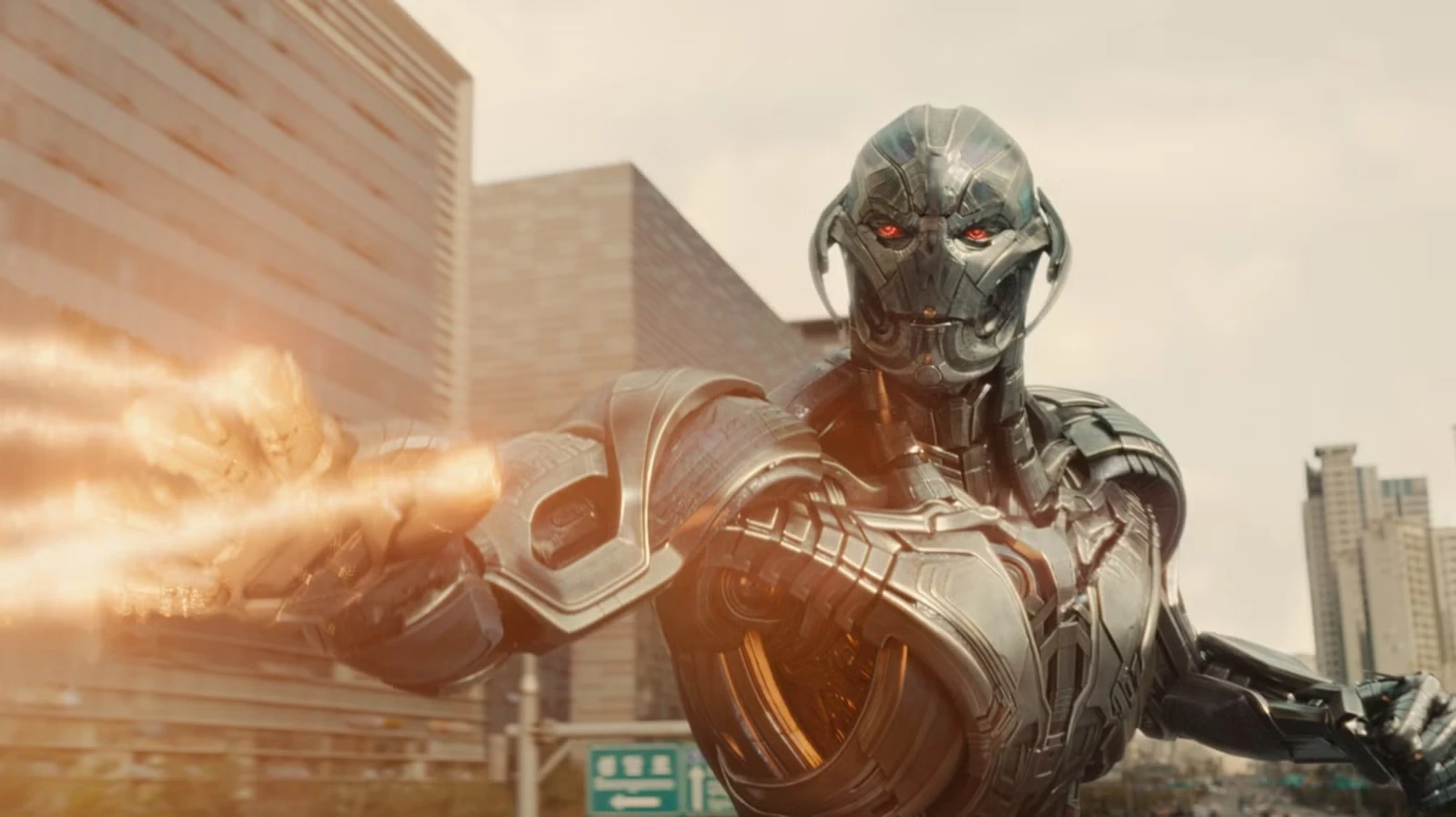
James Spader is back as Ultron for the first time since 2015 — in human form inside Vision's head, with robot Ultron confirmed too. Here's what's confirmed and what isn't.
Vision Quest Comics Explained: What the 1989 Story Means for Marvel's VisionQuest
Marvel's 1989 Vision Quest dismantled Vision, rebuilt him white and fractured his family. Here's what happened — and what Disney+'s VisionQuest is actually borrowing.
About the author
Aram Anwar
Founder & Editor
Aram Anwar founded Red Reactions and writes across comics, gaming, movies and television. His work includes franchise guides and large Lore / Explained features, with an emphasis on separating confirmed details from reports, theory and speculation.
Coverage: Comics · DC & Marvel · Gaming · Movies & TV · Lore / Explained · Guides
More from Aram Anwar