news · movies
Spider-Man Hit $700 Million Faster Than Any Movie Ever. That Doesn't Settle the Superhero Fatigue Argument.
Brand New Day reached $700 million domestically faster than any film in history. Here's what that record does — and doesn't — tell us about superhero fatigue.
 By Aram Anwar8 min read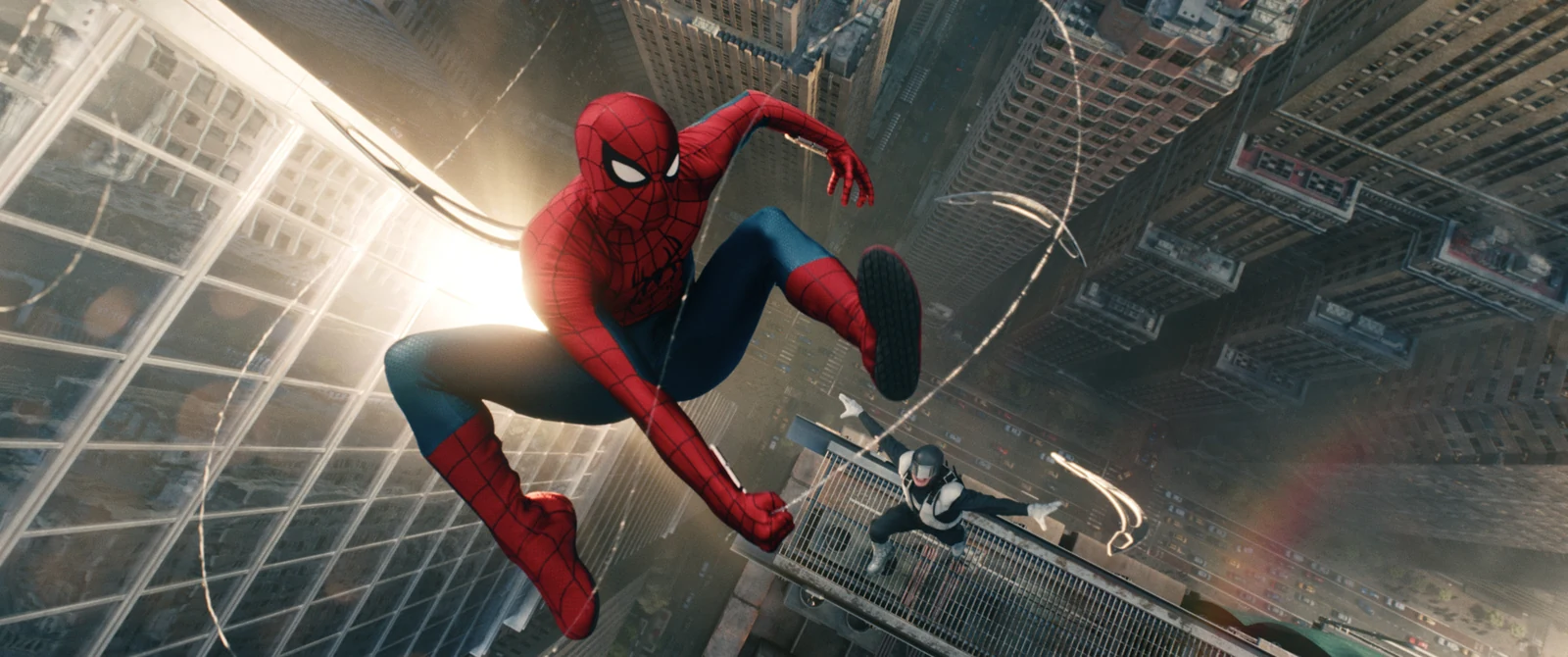
Spider-Man: Brand New Day crossed $700 million at the North American box office on Wednesday, August 12 — thirteen days after it opened. No film has ever gotten there faster. Star Wars: The Force Awakens and Avengers: Endgame previously shared the record at sixteen days, and both of those runs were considered close to the ceiling of what a wide release could physically do.
Deadline put the running domestic total at $704.5 million. It is the seventh film in history to reach $700 million in the United States and Canada, and it currently sits sixth on the all-time domestic chart, having passed Black Panther’s $700.4 million on the way up.
That is the headline. The more interesting question is what, if anything, it tells us about a genre that spent the last three years being written off.
The records, briefly
The $700 million milestone is the newest entry on a list that was already long, though one record on that list gets misreported constantly, so it’s worth being precise. Brand New Day’s final North American opening weekend was $360.09 million, which edged past Avengers: Endgame’s $357.1 million to become the biggest unadjusted domestic opening in history. That margin is under $3 million — a genuine record, but a narrow one.
Its worldwide opening of roughly $932 million is a different story. That figure is the second-biggest global debut ever, and it is not close to the top: Endgame opened to approximately $1.223 billion worldwide, and that record still stands. Brand New Day holds the domestic crown. Endgame keeps the global one.
The rest of the early run was less ambiguous. The film reached $1 billion worldwide in six days, second only to Endgame’s pace, and became the highest-grossing release of 2026 within a week, passing Toy Story 5.
Overseas, it has now taken $1.108 billion, which nudges it past No Way Home’s $1.106 billion to make it Sony’s biggest international release ever. Worldwide, the trades have it around $1.81 billion after two weekends.
The number that box-office watchers actually find remarkable isn’t the opening, though. It’s the weekdays. Per Deadline, Brand New Day is running about 31 percent ahead of No Way Home at the same point in its run — and No Way Home finished at $814.8 million domestically. Comicbookmovie noted the film posted the biggest second Monday and second Tuesday in history. Films of this size almost always front-load; audiences rush the first weekend and the curve falls off a cliff. This one is not falling off a cliff.
The comparison that matters
Against Endgame, the closest available benchmark, Brand New Day is reportedly carrying a lead of more than $50 million at the equivalent point. Against No Way Home — the same character, the same star, the same studio partnership — it is 31 percent ahead.
That second comparison is the one worth sitting with. No Way Home arrived in December 2021 carrying an enormous, well-publicized multiverse hook and functioned as a twenty-year franchise reunion. It was, structurally, an event film. Brand New Day is a smaller story on paper. Per the official synopsis, it follows Peter Parker fighting crime full-time in a world that no longer remembers him, with his old friends having moved on without him. Reviews have consistently described it as a return to street-level, character-driven storytelling rather than another universe-spanning spectacle.
It is outperforming the event film. Comfortably.
Why the “fatigue” framing has always been slippery
For three years, “superhero fatigue” has been the default explanation for every disappointing comic-book release, and there have been real ones. This June, DC’s Supergirl grossed roughly $125 million worldwide against a reported $170 million production budget and was pushed to premium video-on-demand roughly five weeks into its run. In 2025, The Fantastic Four: First Steps opened to $218 million globally — a solid number that nonetheless landed below what a Marvel Studios summer tentpole would once have been expected to deliver, and it dropped hard in its second weekend.
But the same period produced counterexamples. James Gunn’s Superman cleared $500 million worldwide in 2025. Deadpool & Wolverine was a phenomenon. And now this.
Analysts have been making a version of this argument for a while. Speaking to Variety in June about Supergirl’s collapse, Fandango’s Shawn Robbins said he hesitated to call the problem fatigue, framing it instead as “a fatigue of seeing the same type of movies” and arguing that audiences don’t inherently want every hero folded into a shared universe. Comscore’s Paul Dergarabedian made a blunter version of the point in 2025, describing the phenomenon as bad movie fatigue rather than superhero fatigue.
The distinction isn’t semantic. If audiences are tired of superheroes, the genre has a demographic problem and studios should reduce output. If audiences are tired of interchangeable, homework-heavy, obligation-driven sequels, the genre has a quality-control problem — a much more fixable one, and a much more uncomfortable diagnosis for the people making these films.
Brand New Day is a data point for the second reading. It is smaller in scope than its predecessor, requires less prerequisite viewing, and has drawn strong word of mouth. Rotten Tomatoes has it certified fresh with critics and its audience score has been reported as the highest of any solo Spider-Man film, live-action or animated. Whether that reception is causing the weekday holds is not something a box-office chart can prove — but the holds are exactly what strong word of mouth looks like.
The Spider-Man asterisk
Here is where the argument gets weaker, and it’s worth being honest about it.
Spider-Man is not a representative test case. He is arguably the most commercially durable character in the medium, across every version and every studio. Tobey Maguire’s original Spider-Man holds a 90 percent critics’ score twenty-four years later. Even The Amazing Spider-Man 2, widely regarded as a franchise low point, made money. The animated Spider-Verse films built a second successful pipeline in parallel. No Way Home grossed nearly $2 billion during a pandemic.
There is also a five-year gap. Brand New Day is the first live-action Holland Spider-Man film since 2021, which is precisely the opposite of the oversupply that fatigue arguments are built on. And it inherited an unusually clean release corridor: Supergirl had already vacated theaters, and Deadline’s weekend preview had the nearest new competition, The End of Oak Street, tracking in the $20–25 million range.
So: does a Spider-Man movie clearing records tell us Ant-Man’s next outing will? Almost certainly not. Marquee characters have consistently outperformed second-tier ones for years without that lifting the genre floor. The most defensible reading of Brand New Day’s run is narrower than “superhero fatigue is dead.” It’s closer to: when a top-tier character gets a well-received film after a long absence with room to breathe, the ceiling is still extremely high. That was probably always true. This is a very loud confirmation of it.
How high can it actually go
The trades are openly speculating, and it’s worth separating what’s near-certain from what isn’t.
Passing Top Gun: Maverick’s roughly $722 million domestic looks like a formality. Beyond that, the scenarios widen. With the weekday strength it has shown and a third weekend that Comicbookmovie projected in the $57–72 million range, $900 million domestically is being discussed by trade reporters as a realistic outcome rather than a stretch. Force Awakens’ $936.6 million all-time domestic record is genuinely within argument range.
The billion-dollar domestic scenario — which no film has ever reached — has been floated by Variety, as has an outside case for $3 billion worldwide. Both depend entirely on legs holding through late summer, and neither is a projection anyone should treat as a forecast. Films this large have surprised in both directions.
What Sony and Marvel actually take from this
For Sony, the immediate read is straightforward: the Spider-Man arrangement with Marvel Studios remains the single most valuable asset the studio has, and it just produced Sony’s biggest international release in history against a reported $225 million budget.
For Marvel, the read is more interesting, because Kevin Feige’s stated correction over the past two years has been about volume and quality rather than scale. Brand New Day — directed by Destin Daniel Cretton, character-focused, comparatively self-contained — is a reasonably clean test of that thesis, and the test went well. Avengers: Doomsday arrives in December, and it is the opposite kind of film: maximum scale, maximum continuity, maximum shared-universe obligation. If Doomsday performs at a comparable level, the “audiences want smaller stories” reading loses a lot of its force. If it doesn’t, this summer starts to look like evidence of something structural.
For the character at the centre of that next event, see our Doctor Doom explainer.
The bottom line
Brand New Day’s run is real, it’s historic, and it deserves to be discussed as more than a Spider-Man anomaly. But it also can’t carry the entire weight of a genre-wide verdict on its own. What it does establish is that there is still enormous audience appetite for the right superhero movie. What draws people out is what has always drawn them out: a character they care about, in a film that word of mouth says is worth the ticket, without homework.
That was never a complicated formula. It was just an expensive one to forget.
Sources
Make Red Reactions a preferred source
Choose Red Reactions as a preferred source in Google Search.
Confirm your choice on Google.
Related coverage
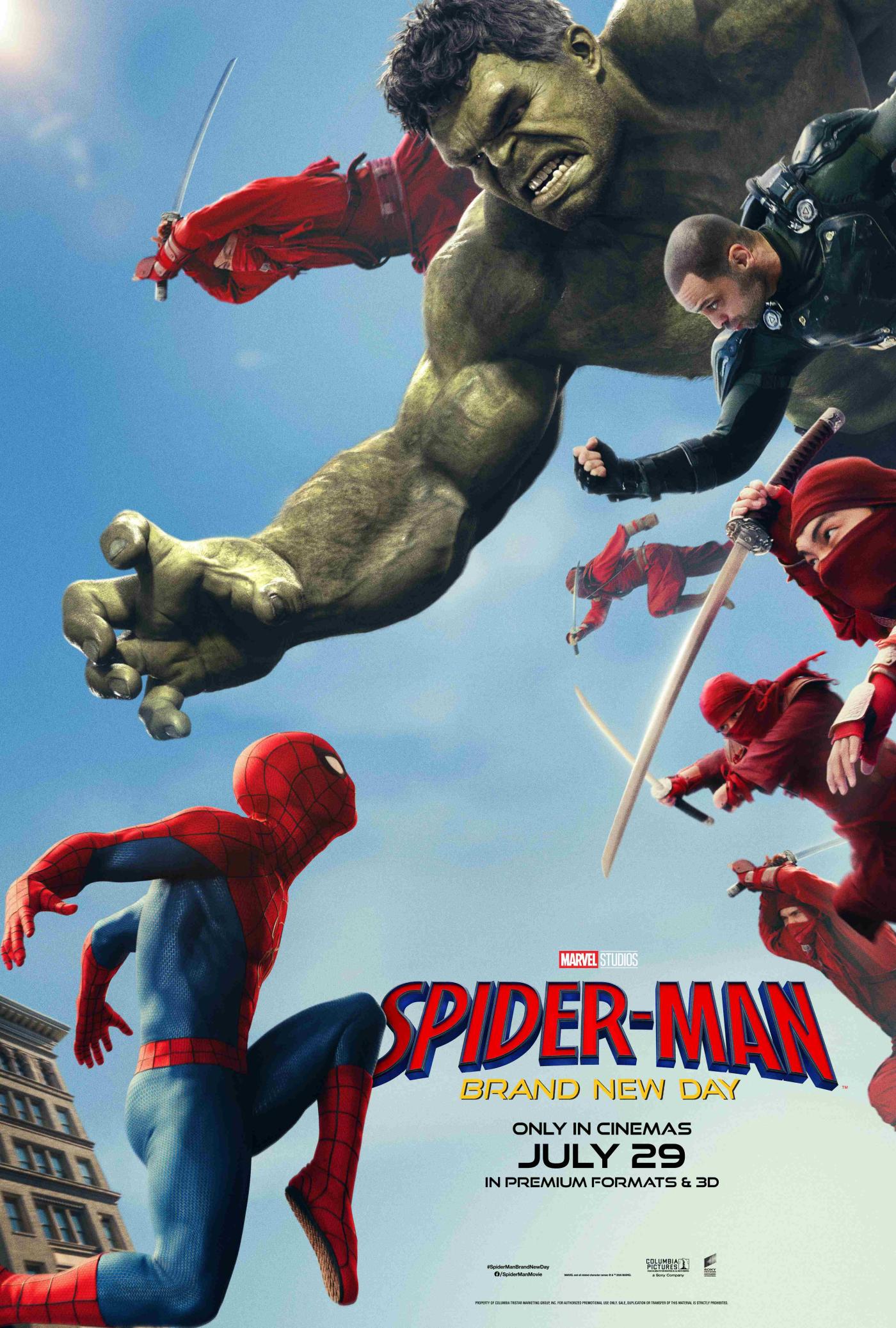
Spider-Man: Brand New Day Is Now the Highest-Grossing Movie Ever at the Domestic Box Office
Spider-Man: Brand New Day remains No. 1 at the North American box office in unadjusted dollars. Here are the latest totals and where Endgame stands after Encore.

Spider-Man: Brand New Day Passes $2 Billion Worldwide
Spider-Man: Brand New Day has crossed $2 billion worldwide, becoming only the eighth film ever and the second-fastest to reach the milestone.

Spider-Man: Brand New Day Home Release — Digital, 4K, Blu-ray and Streaming
Swedish rental and purchase prices for Spider-Man: Brand New Day, plus Apple TV and SF Anytime availability, Netflix, Disney+ and physical-release status.
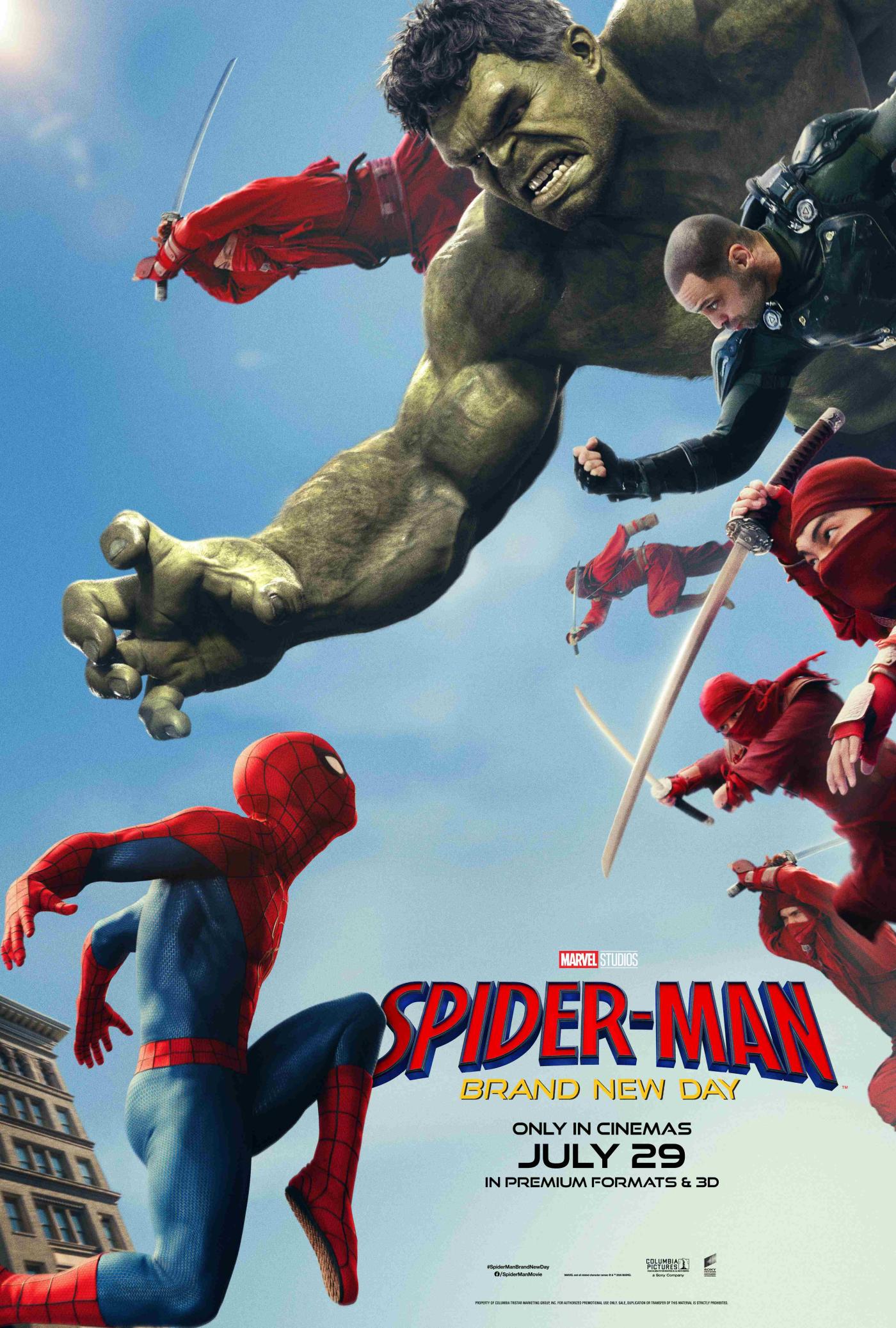
Spider-Man Wins Fourth Box Office Weekend as Insidious Opens to $25.3M
Spider-Man: Brand New Day stayed No. 1 with $39 million while Insidious: Out of the Further opened to $25.3 million, giving Sony the weekend's top two films.
About the author
Aram Anwar
Founder & Editor
Aram Anwar founded Red Reactions and writes across comics, gaming, movies and television. His work includes franchise guides and large Lore / Explained features, with an emphasis on separating confirmed details from reports, theory and speculation.
Coverage: Comics · DC & Marvel · Gaming · Movies & TV · Lore / Explained · Guides
More from Aram Anwar